
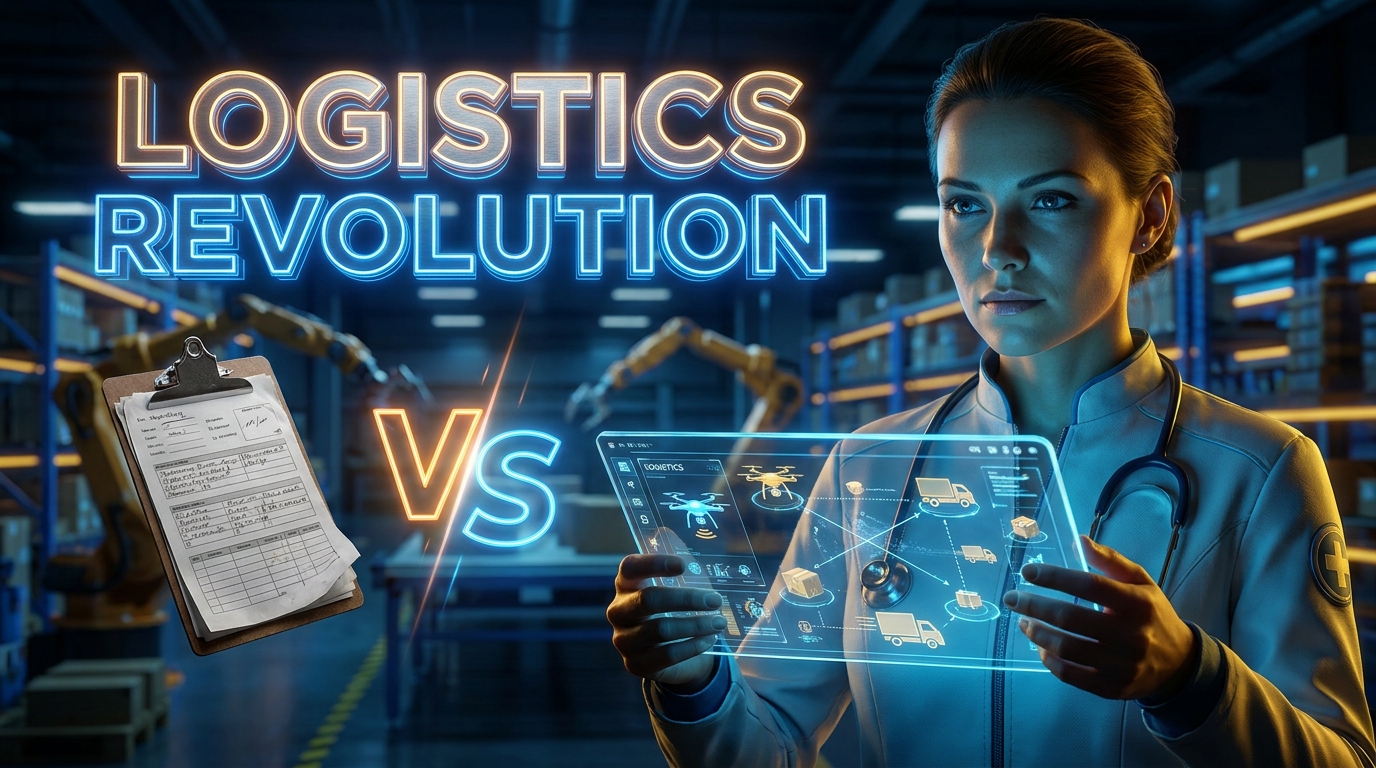
Optimizing Healthcare Logistics: Real-time Inventory & Supply Chain Management for Clinics, Pharmacies, and Labs
In the dynamic and often high-stakes world of healthcare, efficient logistics are not just about cost-cutting; they are fundamentally about patient safety, operational continuity, and the timely delivery of care. From life-saving medications to critical diagnostic reagents, every item within the healthcare supply chain plays a pivotal role. Yet, traditionally, managing this intricate flow has been fragmented, leading to inefficiencies, waste, and, at worst, compromised patient outcomes.
This article delves into the transformative power of real-time inventory and supply chain management, specifically through an integrated health system designed to connect clinics, pharmacies, and labs. We will explore how such a unified approach, exemplified by Sihatee's innovative solutions, addresses key challenges and unlocks unprecedented levels of efficiency, safety, and data-driven decision-making for healthcare professionals.
The Critical Need for Integrated Healthcare Logistics
Healthcare providers face a myriad of challenges in managing their supplies:
- Stockouts and Overstocking: Leading to treatment delays or significant financial waste due to expired products.
- Manual Processes: Prone to human error, consuming valuable staff time that could be dedicated to patient care.
- Lack of Visibility: Inability to track products across the entire supply chain, from procurement to patient administration.
- Regulatory Compliance: Strict requirements for storage, handling, and documentation of medical supplies and pharmaceuticals.
- Cold Chain Integrity: Maintaining specific temperature ranges for sensitive vaccines and medications, a critical aspect highlighted by organizations like the World Health Organization (WHO).
These challenges are amplified when clinics, pharmacies, labs, and warehouses operate as disconnected silos. The lack of an overarching, integrated system means data isn't shared seamlessly, leading to reactive instead of proactive management.
Introducing the Integrated Health System for Optimized Logistics
An integrated health system, such as the one offered by Sihatee, acts as the central nervous system for healthcare logistics. It unifies disparate components – clinics, pharmacies, labs, and pharmaceutical warehouses – under a single, cohesive digital umbrella. This integration is powered by real-time data exchange, providing comprehensive visibility and control over inventory and supply chain operations.
At its core, this system addresses the fragmentation by offering dedicated modules that communicate with each other. For instance, Sihatee's ecosystem includes `MyPharmacy` for pharmacy management, `Madakhery` for warehouse management, `MyClinic` for clinic operations, and `MyLab` for laboratory functions. The magic happens when these individual systems are designed to work together as a single, holistic entity, creating 'المنظومة الصحية المتكاملة' (The Integrated Health System).
Real-time Inventory Management: The Foundation of Efficiency
Real-time inventory management is the bedrock of an optimized healthcare supply chain. It moves beyond periodic stock counts to provide continuous, up-to-the-minute data on every item. This includes:
- Automated Tracking: Using barcodes, RFID, and other technologies to track items from receipt to dispensing/use.
- Instant Updates: Stock levels are updated immediately upon item movement (purchase, sale, transfer, expiry, damage).
- Predictive Analytics: Leveraging historical data and current trends to forecast demand accurately.
- Automated Reordering: Setting reorder points and quantities to trigger procurement automatically, preventing stockouts.
Let's explore how this impacts different stakeholders:
For Pharmacies: Enhancing Dispensing and Stock Control (Leveraging `MyPharmacy` and `Madakhery`)
Pharmacies are at the forefront of medication dispensing. An integrated system transforms their operations by:
- Precise Inventory: `MyPharmacy` provides exact counts of every drug, allowing pharmacists to quickly locate stock and avoid prescribing unavailable medications.
- Expiry Date Management: Automated alerts for expiring medications minimize waste and ensure patient safety by preventing the dispensing of outdated drugs.
- Optimized Procurement: By integrating `MyPharmacy` with a warehouse management system like `Madakhery`, pharmacies can automate reorders based on real-time consumption data, current stock levels, and established par levels. This ensures they always have critical medications without overstocking.
- Reduced pilferage and shrinkage: Comprehensive audit trails for every transaction enhance accountability.
For Clinics: Streamlining Medical Supply Management (Through `MyClinic`)
Clinics require a vast array of medical supplies, from bandages and syringes to specialized diagnostic kits. An integrated system enables `MyClinic` to:
- Point-of-Use Tracking: Track supplies directly at the point of patient care, ensuring that billing is accurate and inventory levels reflect actual usage.
- Procedure Kit Management: Assemble and track pre-packaged kits for common procedures, reducing setup time and ensuring all necessary components are available.
- Supply Chain Transparency: Clinic staff can view real-time availability of supplies, even from a central warehouse managed by `Madakhery`, facilitating quicker patient care decisions.
- Waste Reduction: Monitoring usage patterns helps identify inefficiencies and reduce unnecessary consumption.
For Labs: Precision in Reagent and Consumable Tracking (Supported by `MyLab`)
Laboratories operate with highly specific and often sensitive reagents and consumables. `MyLab` within an integrated system brings:
- Batch and Lot Number Tracking: Essential for quality control and recall management, allowing labs to quickly identify and isolate affected batches.
- Temperature Monitoring Integration: For reagents requiring strict cold chain maintenance, integrated systems can link with environmental monitoring devices, alerting staff to deviations – crucial for compliance with guidelines from bodies like the CDC (Centers for Disease Control and Prevention).
- Automated Replenishment: Based on test volumes and reagent consumption, `MyLab` can trigger automated reorder requests, preventing disruptions to testing schedules.
- Reduced Expired Stock: Proactive alerts for reagents nearing expiry ensure that tests are performed with viable materials and minimize costly waste.
Optimizing the Broader Supply Chain: From Warehouse to Patient
Beyond individual units, the true power lies in optimizing the end-to-end supply chain. Sihatee's 'المنظومة الصحية المتكاملة' facilitates this by bridging the gap between various modules, particularly through `Madakhery` (Warehouse Management) and its interaction with `MyPharmacy`, `MyClinic`, and `MyLab`.
Demand Forecasting and Strategic Procurement
An integrated system aggregates consumption data from all connected clinics, pharmacies, and labs. This consolidated data enables sophisticated demand forecasting. Instead of reactive purchasing, healthcare organizations can engage in proactive, strategic procurement, negotiating better prices and ensuring steady supply. This reduces emergency orders, which are often more expensive and disruptive.
Enhanced Cold Chain Management
For temperature-sensitive items, maintaining the cold chain is non-negotiable. Integrated systems can track products from the `Madakhery` warehouse, through transport, and into the `MyPharmacy`, `MyClinic`, or `MyLab` storage. Automated alerts, digital logging, and integration with IoT temperature sensors ensure that integrity is maintained at every step, protecting the efficacy of vaccines, biologics, and certain reagents.
Expiry Management and Waste Reduction
One of the largest hidden costs in healthcare logistics is expired stock. An integrated system provides a comprehensive overview of all inventory, flagged by expiry dates. This allows for:
- First-In, First-Out (FIFO) Enforcement: Ensuring older stock is used before newer stock.
- Proactive Transfers: Moving items nearing expiry from high-stock locations to high-demand locations.
- Vendor Returns: Facilitating timely returns to suppliers for credit or exchange.
Seamless Procurement and Distribution
When a clinic (via `MyClinic`), pharmacy (via `MyPharmacy`), or lab (via `MyLab`) identifies a need, an integrated system can automatically generate a request to the central `Madakhery` warehouse. The warehouse, in turn, can fulfill the order, update its stock, and trigger reorders from suppliers, creating a smooth, automated workflow from demand to delivery.
Benefits of a Unified Healthcare Logistics Platform like Sihatee's
Adopting an integrated approach to healthcare logistics offers multi-faceted benefits:
Enhanced Patient Safety
- Reduced Medication Errors: Ensuring the right medication, at the right dose, is available at the right time.
- Availability of Critical Supplies: Preventing stockouts of life-saving drugs or essential medical devices.
- Quality Assurance: Maintaining cold chain integrity and preventing the use of expired products.
Operational Efficiency and Cost Savings
- Lower Inventory Holding Costs: Reducing overstocking and optimizing storage space.
- Minimized Waste: Drastically cutting losses from expired or damaged goods.
- Improved Staff Productivity: Automating manual tasks frees up healthcare professionals for patient-focused activities.
- Strategic Sourcing: Better data leads to stronger negotiation power with suppliers.
Data-Driven Decision Making
With real-time data flowing from `MyClinic`, `MyPharmacy`, `MyLab`, and `Madakhery`, administrators gain unprecedented insights into consumption patterns, supplier performance, and operational bottlenecks. This empowers informed decisions regarding procurement, resource allocation, and expansion strategies.
Regulatory Compliance and Audit Readiness
Healthcare is a highly regulated industry. An integrated system provides robust audit trails, detailed documentation of product movements, temperature logs, and expiry data, significantly easing compliance with national and international health regulations. This supports adherence to standards such as those required by health ministries or pharmaceutical regulatory bodies for traceability.
Comparing Traditional vs. Integrated Logistics
To further illustrate the advantages, let's look at a comparison:
| Feature/Aspect | Traditional Logistics (Siloed Approach) | Integrated Logistics (e.g., Sihatee's 'المنظومة الصحية المتكاملة') |
|---|---|---|
| Inventory Visibility | Limited, often manual; data disparate across departments. | Real-time, comprehensive view across clinics, pharmacies, labs, and warehouses. |
| Procurement | Reactive, often based on periodic counts; potential for duplicate orders. | Proactive, automated reordering based on actual consumption and forecast; centralized purchasing. |
| Expiry Management | Manual checks, leading to high waste and potential use of expired products. | Automated alerts, FIFO enforcement, proactive stock transfers to minimize waste. |
| Data Accuracy | Prone to human error; inconsistencies between systems. | High accuracy due to automated data capture and single source of truth. |
| Patient Safety | Risk of stockouts for critical items; potential for medication errors due to lack of real-time data. | Enhanced by ensuring availability, preventing expired product use, and improving traceability. |
| Operational Costs | Higher due to overstocking, waste, emergency orders, and manual labor. | Significantly reduced through efficiency gains, waste reduction, and optimized purchasing. |
| Scalability | Challenging to expand or adapt to new services. | Designed for growth, easily integrating new facilities or services. |
Implementing an Integrated Logistics Solution with Sihatee
For healthcare providers considering such a transition, Sihatee offers a comprehensive and integrated platform that brings together all aspects of healthcare logistics. By leveraging the power of `MyPharmacy`, `Madakhery`, `MyClinic`, and `MyLab`, Sihatee's 'المنظومة الصحية المتكاملة' provides a unified solution tailored to the specific needs of modern healthcare environments.
Implementing an integrated system involves a strategic approach, focusing on:
- Needs Assessment: Identifying current pain points and desired outcomes across all departments.
- System Customization: Tailoring the solution to fit specific workflows and regulatory requirements.
- Staff Training: Ensuring all users are proficient in leveraging the new system's capabilities.
- Data Migration: Seamless transfer of existing inventory and patient data.
- Continuous Improvement: Utilizing system analytics to identify further optimization opportunities.
Sihatee is committed to driving innovation in healthcare, providing tools that not only improve operational efficiency but also significantly enhance the quality and safety of patient care. Learn more about how Sihatee can transform your healthcare operations by visiting Sihatee.com.
Conclusion
The journey towards truly optimized healthcare logistics is paved with integration, real-time data, and intelligent automation. By connecting clinics, pharmacies, labs, and warehouses through a sophisticated 'المنظومة الصحية المتكاملة' application, healthcare providers can overcome traditional challenges and build a resilient, efficient, and patient-centric supply chain. The benefits extend beyond mere cost savings, encompassing enhanced patient safety, improved clinical outcomes, and a more sustainable healthcare ecosystem. Adopting such innovative solutions is not just an upgrade; it's a fundamental shift towards the future of healthcare delivery.
Key Strategic Insights
| Factor | Strategic Impact |
|---|---|
| Market Trends | High Growth Potential |
| Risk Analysis | Mitigated via Data |